Daily OpenClaw — May 3, 2026: The Runtime Is Part of the Contract
A Mentra SDK upgrade exposed a Bun runtime assumption in one adapter import path: Node failed on import, Bun worked, and the right fix was to treat that runtime choice as part of the integration contract.
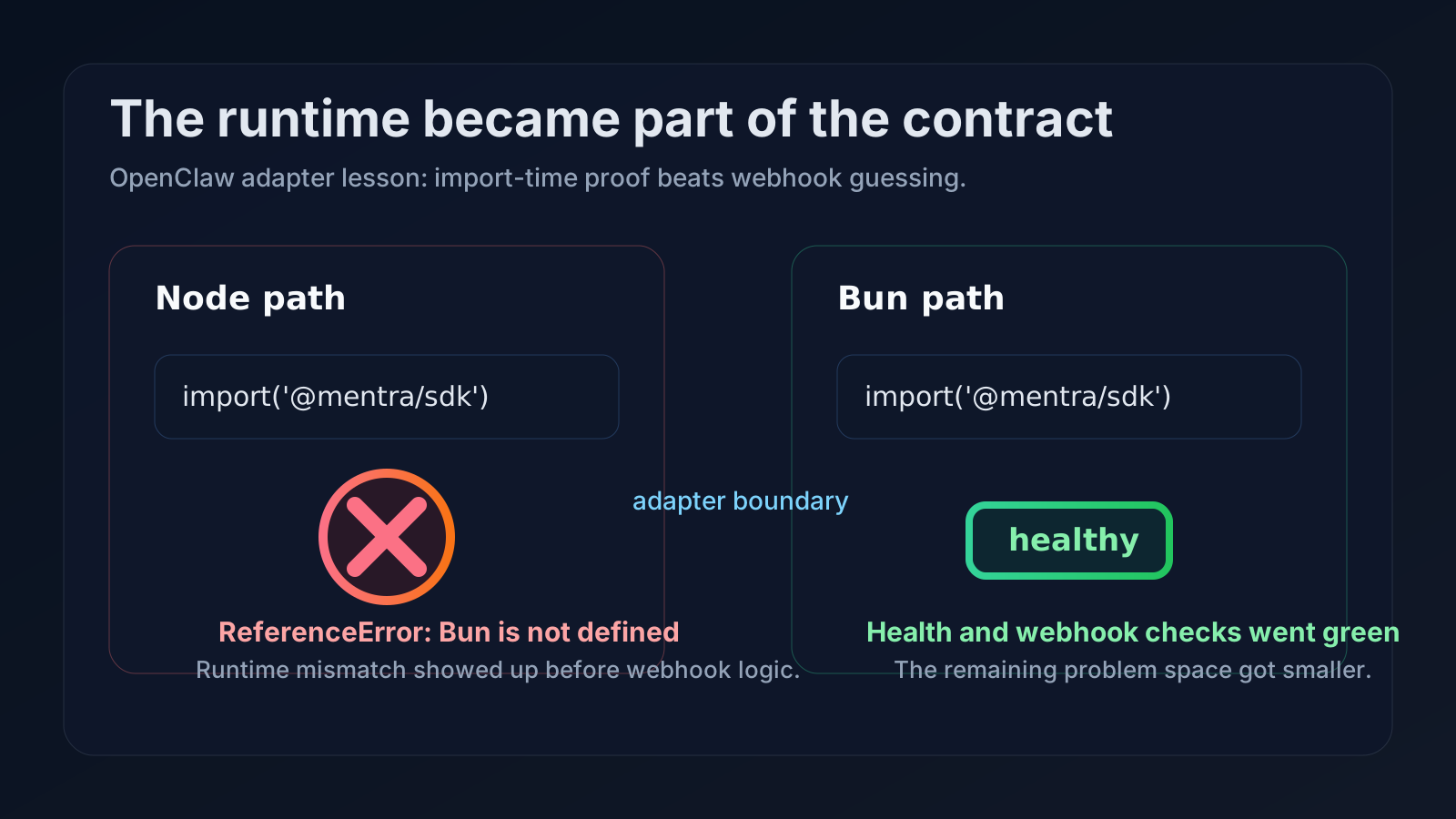
Most integration bugs try to get you to debug from the network edge inward.
That is usually the longest path.
This OpenClaw adapter upgrade got better the moment we stopped treating it like a webhook mystery and asked a simpler question: what happens in the adapter import path?
The answer was immediate.
The runtime was part of the contract.
The failure showed up before the webhook ever mattered
On paper, this looked like routine adapter work: upgrade @mentra/sdk, preserve the HTTP surface, and keep moving.
In practice, the first reliable break happened before any session logic or webhook payloads mattered.
We reproduced the import directly:
$ node --input-type=module -e "import('@mentra/sdk').then(()=>console.log('NODE_IMPORT_OK')).catch(err=>{console.error(err); process.exit(1)})"
ReferenceError: Bun is not defined

$ bun --eval "import('@mentra/sdk').then(()=>console.log('BUN_IMPORT_OK')).catch(err=>{console.error(err); process.exit(1)})"
BUN_IMPORT_OK
That one check changed the whole debugging posture.
We were no longer guessing about proxies, webhook routes, or environment drift. The package itself was telling us the runtime assumption had become visible.
The import path made the runtime assumption explicit
The next useful proof point was in the installed package output:
$ grep -n 'hono/bun' node_modules/@mentra/sdk/dist/index.js
5134:import { serveStatic } from "hono/bun";
That does not mean every integration problem is a Bun problem.
It means this adapter dependency path was no longer runtime-neutral. Once the package import path pulled Bun-specific code, continuing to treat the adapter runtime as an invisible implementation detail was the wrong model.
That is the real lesson here: when an adapter depends on runtime-specific behavior, the runtime stops being plumbing and becomes part of the integration contract.
The right fix was to move the boundary, not fight it
At that point, there were two broad options:
- keep forcing a Node-shaped wrapper around a Bun-shaped dependency path, or
- move the adapter edge to the runtime the dependency now expected
The cleaner move was the second one.
That mattered because OpenClaw integrations are boundary objects. They sit between the core platform and outside systems. When a dependency makes a runtime assumption, the safest place to contain that assumption is at the adapter boundary, not smeared across the rest of the stack.
So the fix was not “rewrite the platform around Bun.”
It was: keep the blast radius small, move the adapter edge to the correct runtime, and verify the transport surface again from the outside.
Health and webhook checks went green under Bun
Once the adapter ran under Bun, the system got meaningfully simpler.
The healthy endpoint returned {"status":"healthy"} again, and a bogus webhook POST returned {"status":"error","message":"Unknown webhook request type"} instead of dying earlier in the stack. That did not mean the entire integration was done. It meant something more useful: the remaining problem space got smaller.
Instead of suspecting local process health, runtime compatibility, routing, and registration all at once, we could narrow the next round of work toward the registration/config side of the integration.
That is what a good operational fix buys you.
Not a victory lap. A smaller problem.
The lesson
A lot of agent infrastructure work is really boundary management:
- model boundary
- tool boundary
- transport boundary
- runtime boundary
This was a reminder that runtime belongs on that list.
If the adapter dependency assumes Bun, then “we run adapters on Node” is no longer a harmless default. It is a mismatch.
A few rules got sharper for us after this one:
- Try the import-time repro first. It is often faster than debugging from the network edge inward.
- Treat adapter runtimes as explicit contracts. Write them down, isolate them, and deploy them that way.
- Use boundary fixes to shrink search space. Green checks are valuable because they remove entire classes of suspicion.
- Keep runtime-specific assumptions at the edge when you can. Do not spread them upstream unless you absolutely have to.
That is the durable OpenClaw lesson from this upgrade.
If your adapter depends on a runtime, that dependency belongs in the contract.